Friday, October 29, 2010

Highest Catalogued Stamp/Postal History Item of Indian States


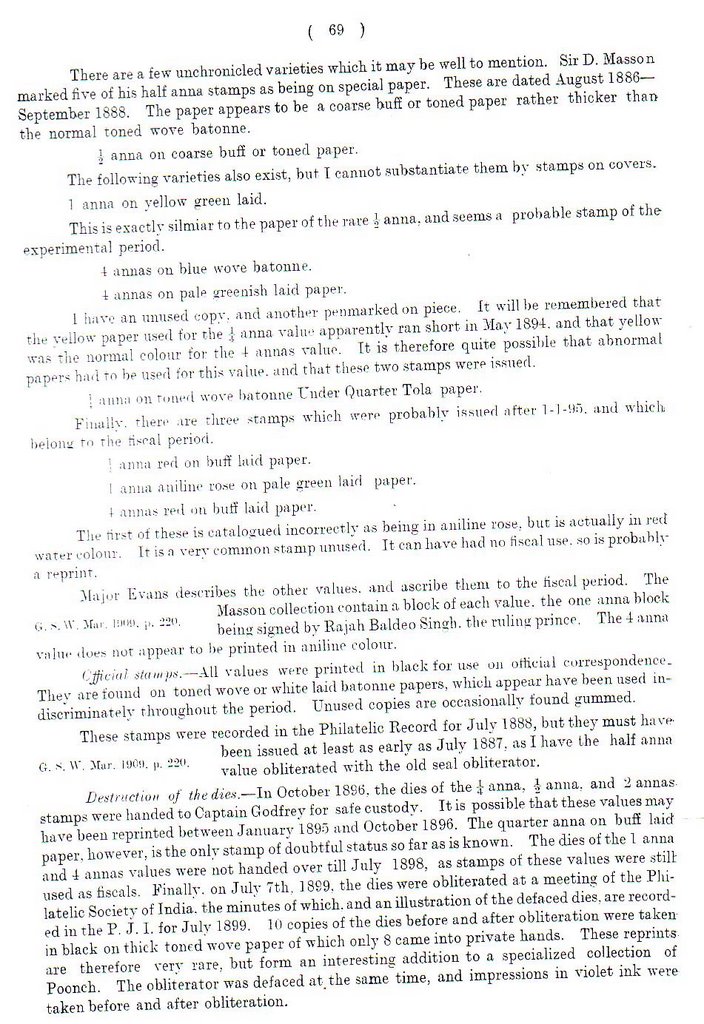
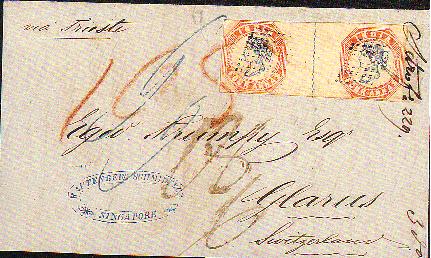
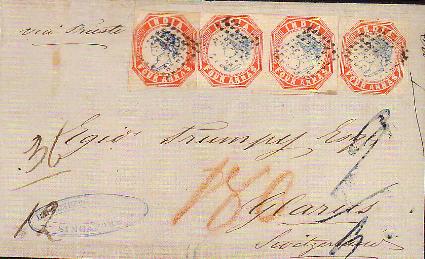
The highest catalogued stamp of Indian Feudatory States (2007 Stanley Gibbons), unique (SG2b), alongwith another rarity (SG3a) on the only known cover of the Duttia first issues !!

I know of only one item that satisfies the strict criteria laid in the post on overseas philatelic rarities in context to India- one belonging to the princely state/feudatory state of Duttia (also known as Datia).

The rarest of the Indian stamps include the Inverted Head 4 Annas (pre-independence) and the Gandhi 10Rs Service stamps (post independence). Of course, neither even comes close to the rarity or the significance of the Duttia cover (as per Stanley Gibbons, 27 of the inverted heads have been discovered and approximately 8 or 9 of the Gandhi are in private stock including one in my collection).


The description of the item as per the expertization certificate is as follows : "Duttia 1896 1/2 a postal stationary envelope with blue control handstamp (Deschl E4), registered, franked with 1896 1a red black control handstamp (SG3a) and c.1894 2a grey-blue on yellow with red control handstamp (SG2var), envelope and adhesives cancelled by oval black intaglio seals, with red-brown oval handstamp alongside, red manuscript registration on reverse, is genuine Sd - Philip Kinns"

The Duttia cover had set a new record in 2006 for Indian Princely States Philately (and for that matter for Indian Philately) with one of the under-bidders being the most reputed firm in British Commonwealth Philately. While the auctioneer understood the significance of the item and placed a high reserve value, they did not accurately describe the item (i.e. "a stamp hitherto unknown"), and as well not point out that one of the stamps was unique. In addition (and also not advertised), the postal stationary cover on which the stamps were added for registration is rare - being of an un-cataloged error of type printed inverted.


How many 2 annas (SG2 including all sub-types/variations/used) are known ?

From "Dilemmas of Early Duttia by Frits Staal 1992" - Of the two annas , I have seen or found illustrations of seven copies, which are all different from each other.

How many 1 anna reds (SG3 including all sub-types/variations/used) are known ?
From "The Stamps of the Indian Feudatory States by Col Douie - Philatelic Journal of India 1934" - Though not strictly relevant to this article, it may not be out of place to refer to the 1 anna red stamp which is commonly supposed to be a contemporary of the first issue. The stamp is excessively rare. There was a copy in the Hind sale, and Mr Sefi recently showed me another. These two and a copy in my own collection are the only ones of which I have any record. The ink is rather too liquid, making judgment difficult, but the figure of Ganesh appears to be of the small type without the characteristic break in the trunk. If this is so, it is strong evidence that this is the earliest stamp issued by the state. Fortunately the shade of the stamp, and the arrangement of the lines of printers rule, render successful forgery practically impossible. More recent estimates would place the numbers of the 1 anna reds slightly more at perhaps 10 copies.

How many covers/ used on piece postal history items are known bearing stamps from SG1-SG7 (the early issues and including all variations/sub-types) ?

Only this one !!!!

Thursday, November 05, 2009

At Interesting Item of Post-Independence Indian Philately


As per the book being published by Dr. Reuben Ramkissoon and Dr. Rajagopalan (Philatelic handbook on Mohandas Karamchand Gandhi - 2006) , only eight copies of the Gandhi 10 Rs Service stamps are known in private collections!!

This stamp is considered to be the rarest gem of the independence issues. Jal Cooper had described the Gandhi 10Rs Service stamp as "practically unobtainable"

Excerpt from an excellent article titled "The Story of Gandhi Stamps by Mr T.N. Mehta".

"Why a 10-rupee Gandhi stamp? Commemorative stamps invariably are issued in popular postage denominations; the 10-rupee variety in the Gandhi series is the solitary example of its kind. This step deprived a large number of collectors of possessing the full set because they could not afford the 10-rupee stamp. To other philatelists this was a boon, as the value has been steadily mounting year after year.

Philatelists the world over were agitated by this inclusion of a high denomination in the Gandhi set. Margaret Bourke-White of Time/Life, who knew the Mahatma well, met with Sir Benegal Rama Rau, the Indian ambassador to washington, and later sent a long cable strongly protesting this move, and stating that it was highly improper for the government of India to issue a 10-rupee stamp in the name of Gandhi, who always used the cheapest form of communication - a postcard."

For sure, Gandhi would be extremely distraught to know of the 10Rs SERVICE stamp's catalogue value !!

Expertization certificate from RPSL (1982) and the BPA (2006) . Overprint (SERVICE) blackened-out on image.

Sunday, November 01, 2009

Bamra Second Issue On Cover


Bamra SG10b on cover. Bamra second issue used commercially on cover is rare. This cover is interestingly a second issue error used on cover. Benns P3 Bamra cancellation.


Saturday, October 31, 2009

Barwani - Postal Stationary C1 & C3


ex-SteinKamp - Barwani first issue postal stationary is very rare. Less than three copies are known of C1 and C3. The C1 above is dated february 1927 - which probably is the earliest recorded use of postal stationary in the state.

Thursday, October 01, 2009

Rajpipla - Earliest Postal Stationary Usage


Nandod (Local/Feudatory Post Office) - Jul 4, 79
Chandod (Imperial Post Office) - Jul 4, 79
Bombay ("B" cancellation) - 7 Jul
London - Aug 10 , 79

Commercially used lettersheet converted for use an an envelope. Passing through the feudatory post office at Nandod. Similar to the usage of the 1-paisa stamp of Rajpipla used on covers for out of state delivery delivery.

The earliest documented use of an Indian States postal stationary.


Nawanagar Typeset Study - Derek Bates

Nawanagar Typesets - Derek Bates - 1

Wednesday, May 07, 2008

Jasdan First Issue


Jasdan First Issue (pre-SG1) - Click Here For Article
N.B - This article was based on preliminary studies - and needs to be updated/corrected based on further research. In case you have some comments/suggestions/scans of materials that can assist - please do let me know.

Stanely Gibbons list the one anna myrtle green perf 10.5 stamp as the first issue of Jasdan - however, these were only discovered and documented a year after the start of the state post office. The first issue stamps (currently un-catalalogued) are documented.


Saturday, January 20, 2007

Poonch - An amazing rarity


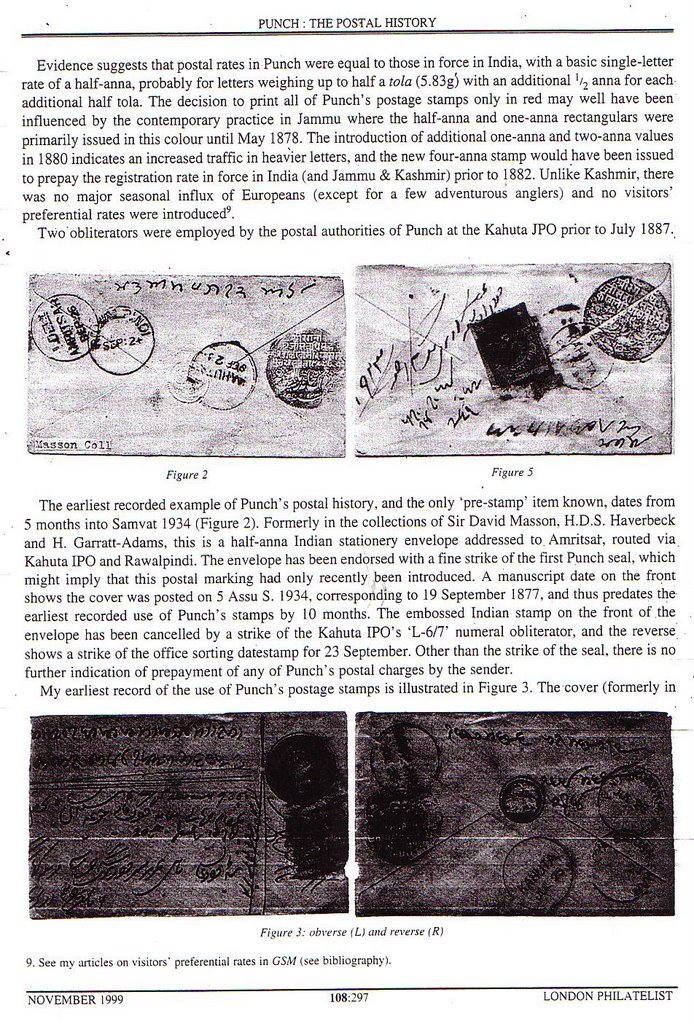
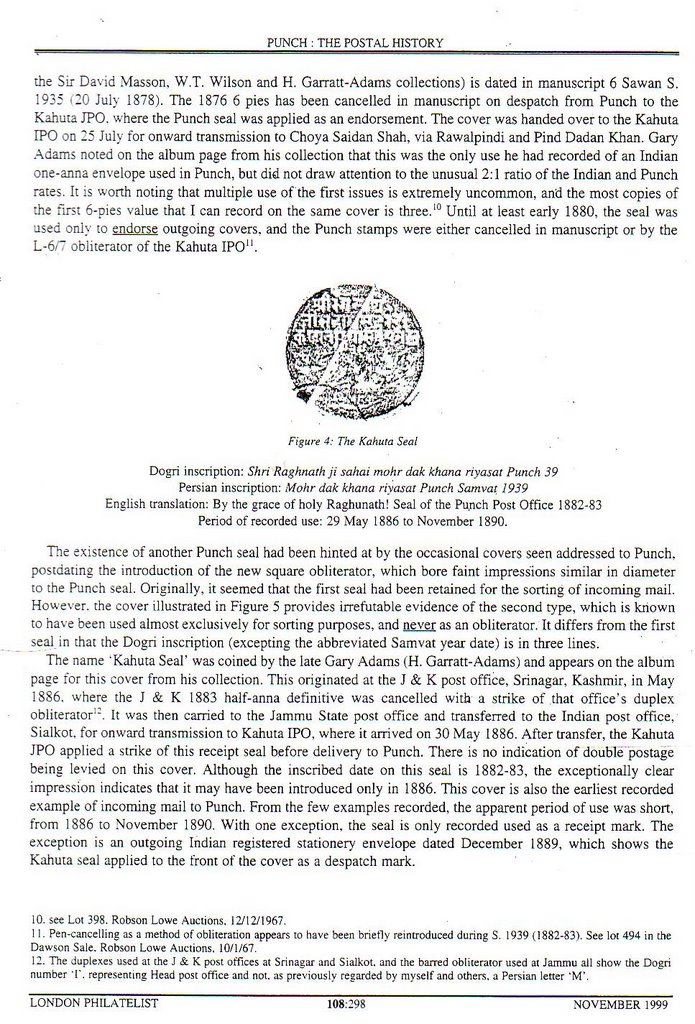
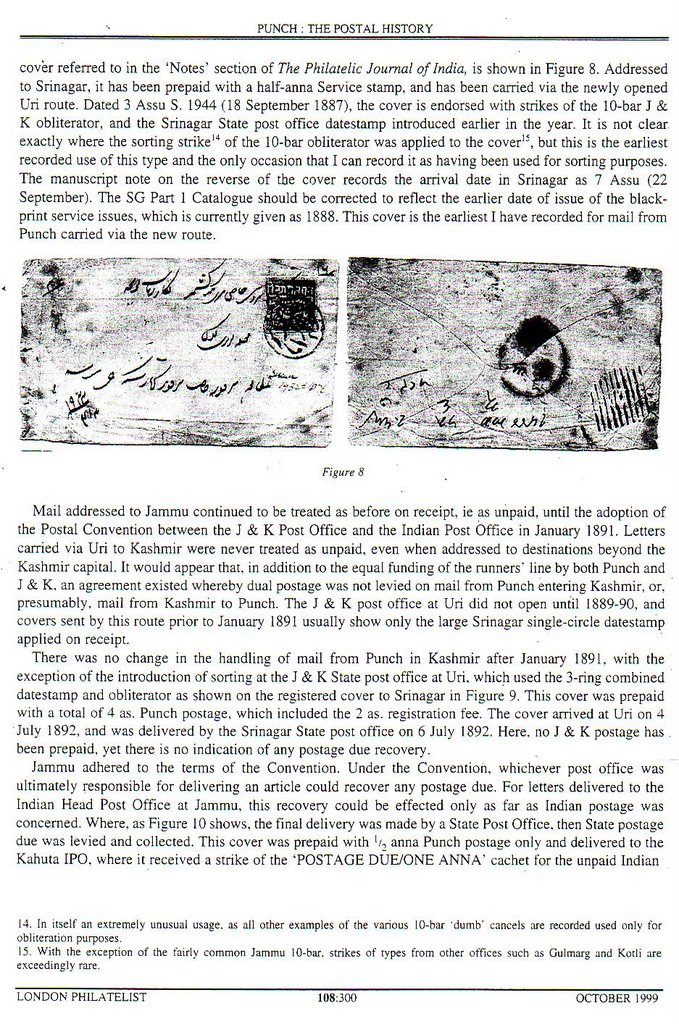
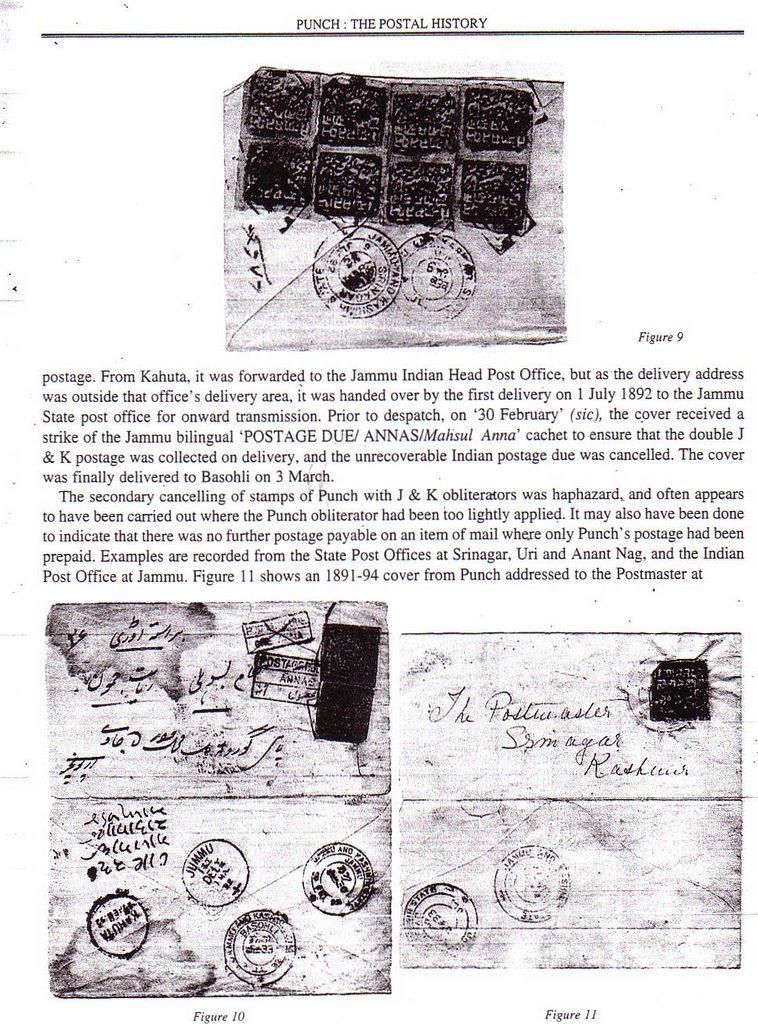
A cover in its entirety to Choya Sadan Shah via Kahuta with the unique pair of Poonch SG1 (with one stamp sideways). The Queen Victoria half-anna postal stationary with the SG1 pair on reverse were posted from Poonch where the Poonch stamps were cancelled by manuscript. Cancelled further at the Imperial Post Office at Kahuta (Sep 8) and bearing the intaglio Poonch seal (four lines of Devnagiri) - a sorting mark/cancellation applied by the Jagir Post Office also at Kahuta where the item was forwarded to its destination - in this case to Choya Saidan Shah where it was cancelled Sep 9 (the date slugs are inverted on the cover).


  • Pairs of Poonch first issues are extremeley rare. This cover bears the second such pair recorded. An SG2 regular pair (not with error and on piece) was exchanged between Duke Philipp von Ferrari and Tapling for a Mauritius Mint Post Office 2d (the used Mauritius stamp is catalogued at ₤550,000, the mint is not priced).


  • While the SG2 pair is an extra-ordinary item , it does not get accorded the status of ‘var’, ’error’ or ’2a’ as they are just plain multiples – unlike tete-beche’s or pairs with one stamp sideways (semi tete-beche) - which are considered to be a variety or an error.


  • This particular (and unique) item was documented by Douie in his article in Philatelic Journal of India in 1932. Auctioned n the 1940's remained completely buried for 60+ years and is still not in any catalogue.


  • An item of amazing rarity and significance, an unique error, of the first issue; moreover, on an entire cover used in combination with a British India postal stationary in very fine condition.

    2006 expertization by the BPA (and signed by Dr Philip Kinns)

Forgeries - Nawanagar

Most images are from items for sale at auctions / ebay.


Monday, December 18, 2006

Poonch - Further notes on the cover

Besides these two covers that bear multiples of the Poonch first issues, there are two addition covers with multiples (but detached stamps and not pairs) of the 1876 issue recorded. One was last seen in the Robson Lowe auction of December 1967 (lot 398) and is described as "1876 6p. red three examples, one very fine used with India 1/a blue on reverse of an envelope which also has India 1/2 anna blue and 1 anna brown on the front". The fourth bears two 6 pies of 1876 and three 1 anna of 1880.
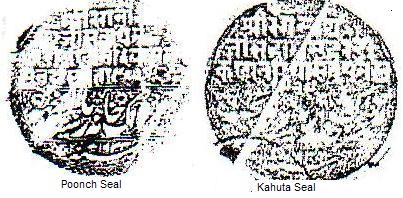
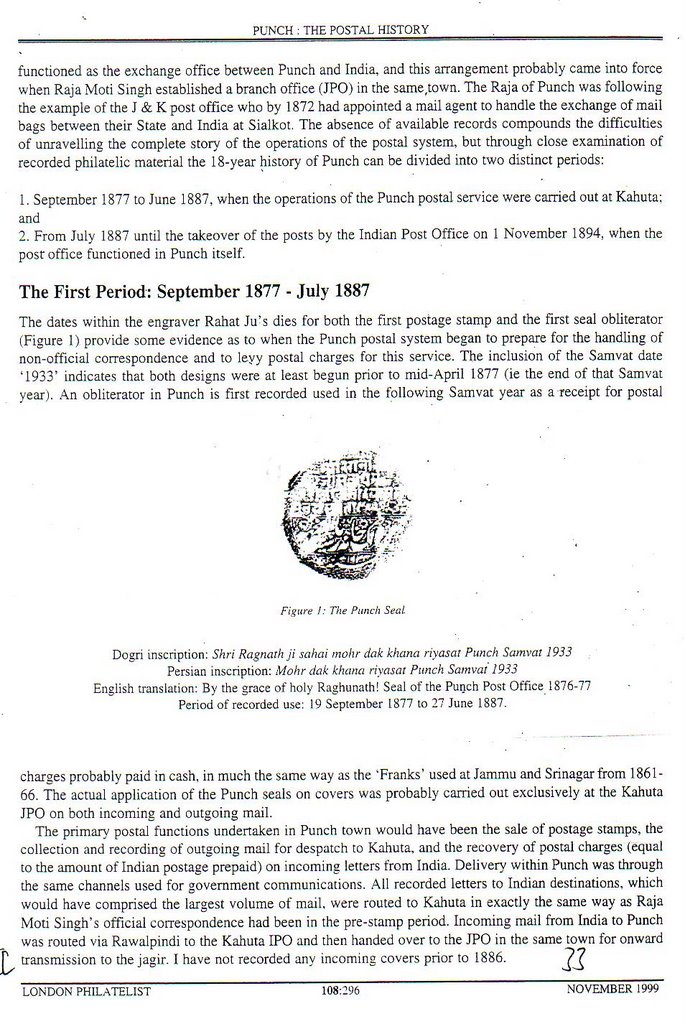
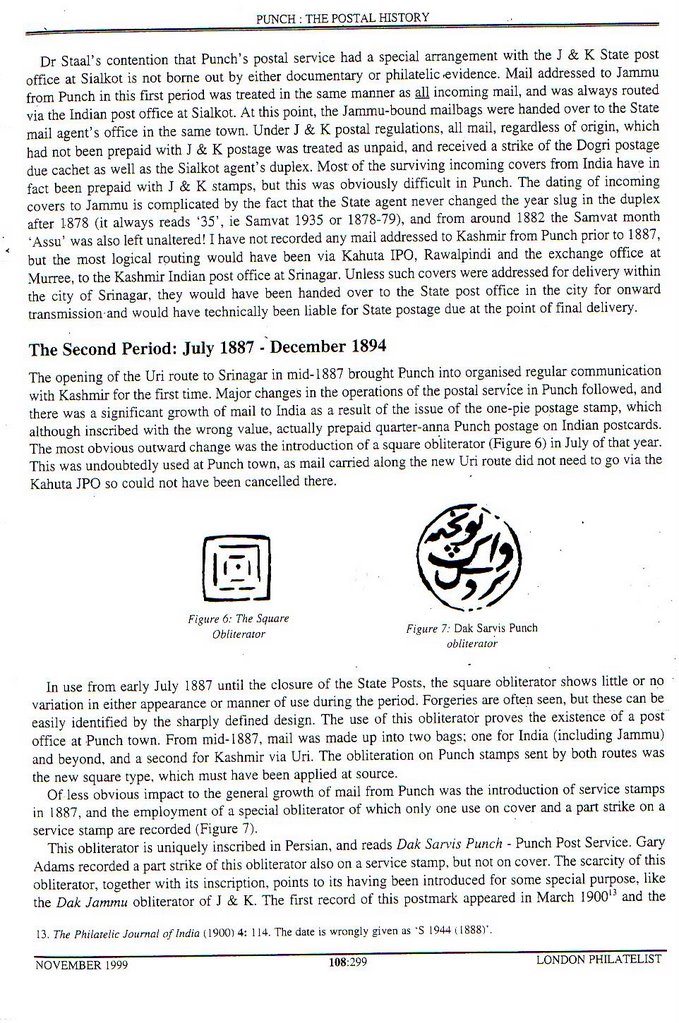
Seals Used in Poonch : There were two intaglio seals in existence in Poonch , one that has been called as the "Poonch Seal" with four lines of Dogri inscription reading "Shri Raghnath ji sahai mohr dak khana riyasat Punch Samvat 1933" and the second called the "Kahuta Seal" and reading "Shri Raghnath ji sahai mohr dak khana riyasat Punch 39" .


The Kahuta seals seems to have been exclusively used for sorting purposes ( a receipt mark) and never as an obliterator. The only exception being on an outgoing British Indian registered stationary envelope which shows the Kahuta seal applied to the front of the cover as a despatch mark.

Literature

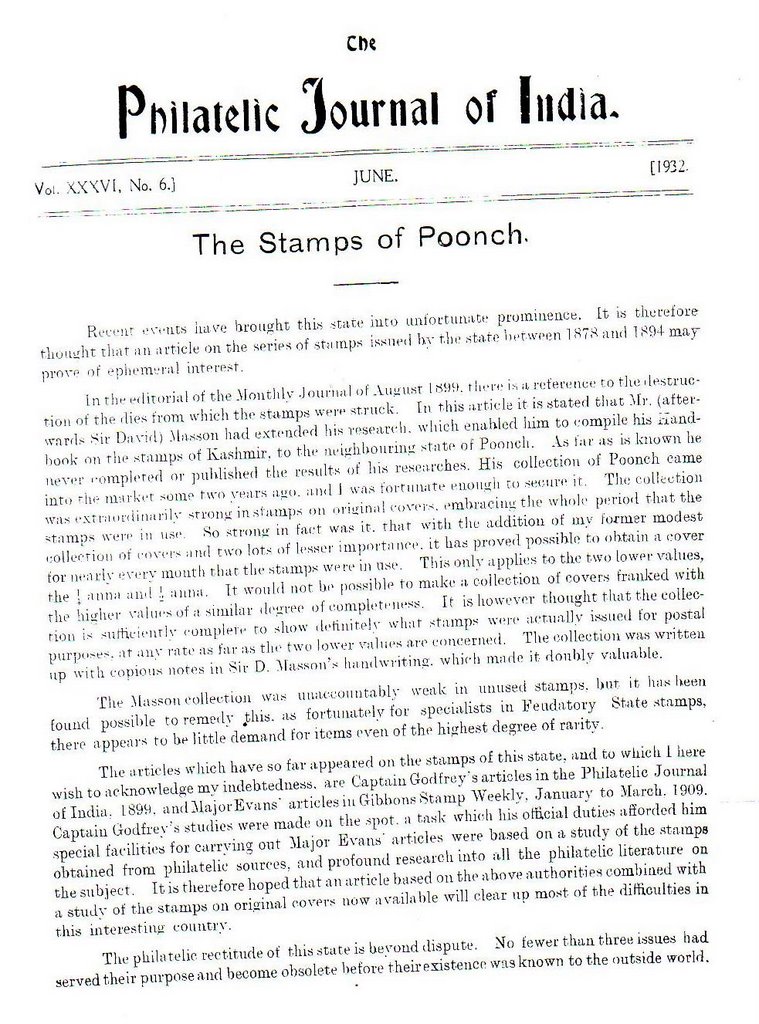
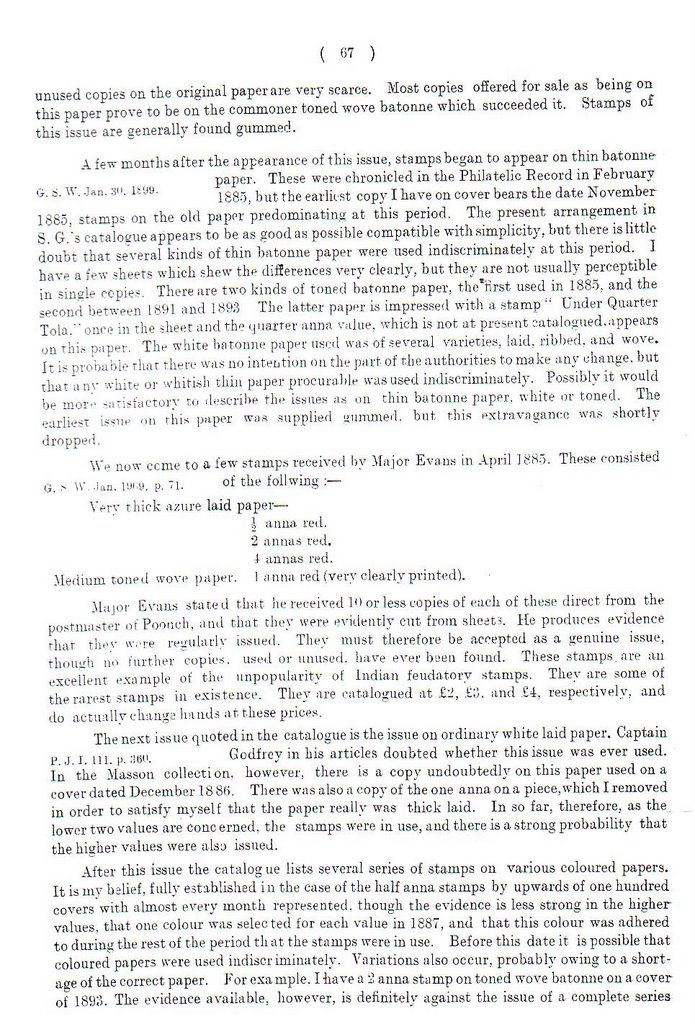
Stamps of Poonch - Douie, Philatelic Journal Of India 1932

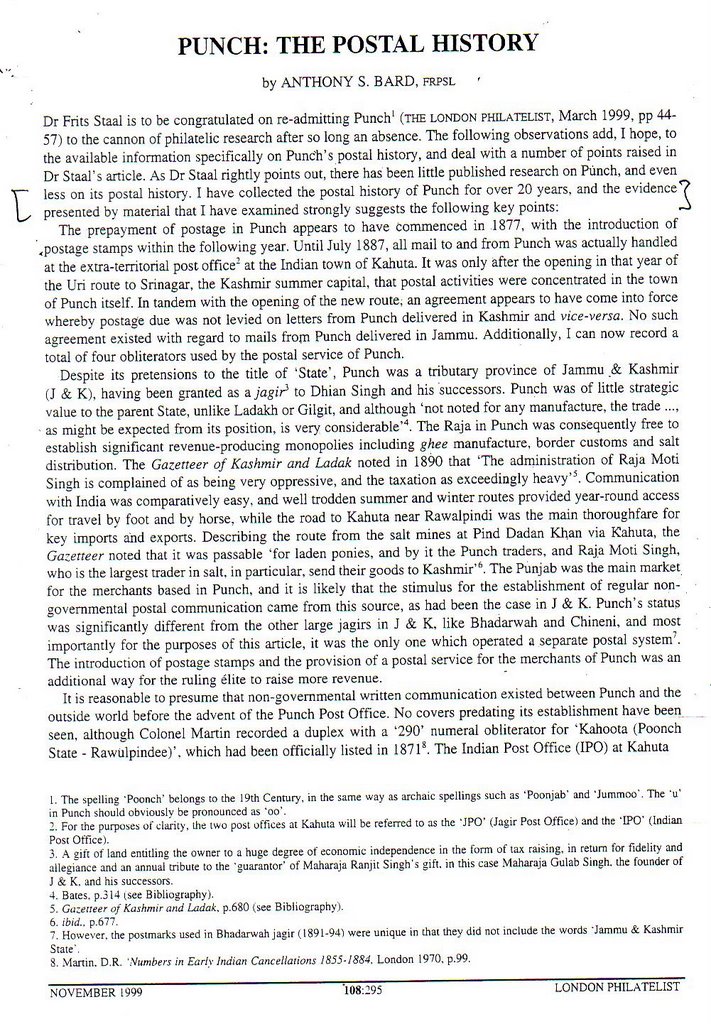
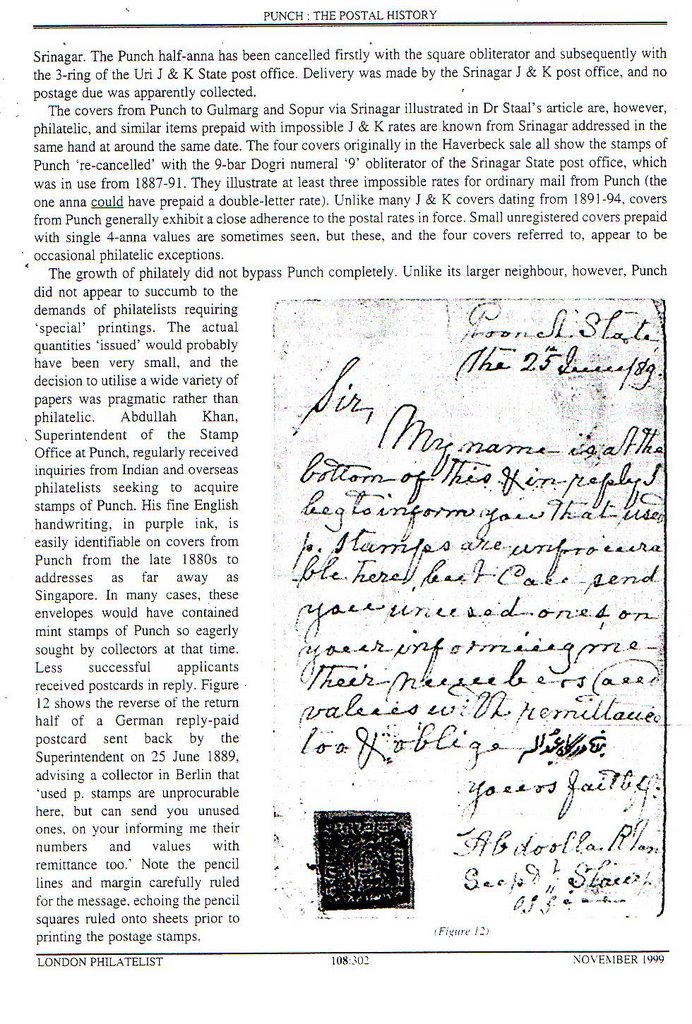
Poonch: The Postal History by A.S.Bard

Valuation

Looking at Stanley Gibbons catalogue, the more rare of the tete-beche varieties are valued at multiples of 100-1000 times the ordinary stamp (e.g. the semi tete-beche variety of SG12, SG52 are all catalogued at a multiple of 1000). Note that this tete-beche is not rare but unique! In addition what multiple would you estimate for the stamps being on cover (in very fine condition) in combination usage with a British India postal stationary?

Friday, December 01, 2006

Further Notes On Straits Settlements

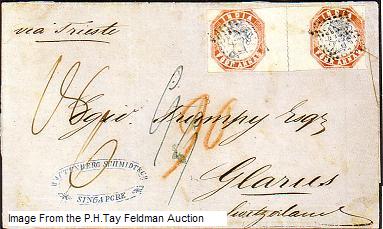
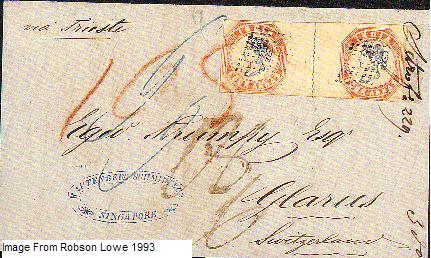
Besides the one cover depicted in the previous article from the Robson Lowe 1986 Sale (and another in my collection), there are four additional entire covers known with 1854 4 anna pairs and used in Straits Settlements. They are as under:

Lot 60088 (David Feldman) Sold in 1986 for 20,000 swiss francs.

Lot 60089 (David Feldman) sold in 1986 for 24000 swiss francs.


Lot 128 , Christies Robson Lowe (1993), Sold for 7000 pounds

Lot 129, Christies Robson Lowe (1993) , Sold for 9400 pounds

Poonch: The Postal History by A.S.Bard


Thursday, November 02, 2006

Rare Item From Poonch


Poonch has been described as a feudatory state, but technically speaking it was feudatory not to the British , but to the State of Jammu & Kashmir. The initial stamps of Poonch are very rare. Shown is the one of the four known mint copies of SG1. This particular example has small defects - the certificate from BPA(2006) being as usual harsh and stating - "Indian Feudatory States - Poonch: 1876 6p red, on yellowish white wove paper, no wmk, imperf, design 22*21mm, value in circle, five rosettes in outer pane (SG1), unused with part original gum, blue ink manuscript on reverse, thinned and defective is genuine. Sd- Philip Kinns"

Of the other three known copies , one is creased, one is disputed (the 2003/4 issued BPA certificate does not bear Dr. Kinns signature), and another is defaced (partially printed).

From an article in the Philatelic Journal of India ,1932 - By Douie:

"The philatelic rectitude of this state is beyond dispute. No fewer than three issues had served their purpose and become obsolete before their existence was known to the outside world. The first issue was recorded in 1899, fifteen years after the last copy was used, the second issue in 1930, 51 years after it became obsolete, and the third issue in 1899, eighteen years after its demise - a record which must be unique. The fourth issue appeared in 1884, and was the first issue to be correctly recorded in the philatelic press. The only fault which can be found with the stamps is the number of different coloured papers on which the stamps appear, thus giving rise to an apparently unnecessary number of varieties in the stamps of the fourth issue. ... The first issue of Poonch consists of one value only, a six pies or half anna stamp. ... I have some forty copies of this stamp of which 25 are fortunately on dated covers or pieces. The period during which it did duty was from November 1978 (or possibly earlier) till March 1884. The stamp is not common and is very rare unused, the three copies in the Masson collection being the only ones I have seen"